
ICIS Elections
All members in good standing will have received a link directly to the email on their membership account for the electronic vote. Only members who are fully paid for the current year (2026 or 2027 membership expiry) are eligible to vote in the election. Please review the information below and vote before the election closing date of April 24, 2026.
If you have not received the voting link, please contact the Secretariat to confirm your membership.
ICIS members are invited to participate in the election process by nominating candidates or standing for the upcoming board elections. The Nomination Committee will consider all nominations and create a slate of candidates for our open positions.
Positions Available
(1) President-Elect
(1) Board Member serving as Communications Chair
(1) Board Member serving as Partnership Chair
(1) Secretary
Board members are expected to:
-
- Commit to attending quarterly board meetings
- Join and actively participate in board committees (e.g., membership, awards, undergraduate)
- Actively work toward ICIS strategic goals
Duties of the Board
The duties of the Board are to conduct the business of the Society, including but not limited to:
-
- Formulating policy and referring policy decisions to the Membership for approval
- Selecting chairpersons for standing committees and other committees established by the Board
- Soliciting nominations and preparing election slates for Board Member elections and confirming election results
- Selecting the Editor of any journal publications sponsored by the Society
- Serving on a committee that meets every 3 months ahead of the quarterly board meeting
- Entering into contracts with external organizations to assist with the management of the Society. Such an agreement will require a majority vote by the Board for any contracts and amendments
- Ongoing efforts as needed in running the business of the society in activities including but not limited to input on fund raising efforts, creating new initiatives and assisting with existing initiatives for undergraduates, graduates, early career scholars, and the membership at large (e.g., awards, webinars and workshops), and outreach to and collaboration with other relevant societies
The terms begin July 2026 and end July 2032.
2026 Elections Timeline
Nominations open: February 3
Nominations close: February 28
Elections open: April 10
Elections close: May 1
ICIS President-Elect Nominees
The President-Elect position is a six-year term. The incumbent will serve two years (2026 – 2028) as President-Elect, two years as President (2028 – 2030) and two years as Past-President (2030 – 2032).
Members have one vote for the President-Elect role.

Jeffrey J. Lockman
The University of Texas at Austin, USA
I have been a longtime contributor to ICIS and the field of infant development. My research focuses on early cognition, perception-action development and the social context of action. In this work, I have taken a multi-disciplinary and cross-cultural perspective, using behavioral, eye-tracking and motion tracking methods. Our studies have been supported by NIH and NSF and have appeared in the major journals in the field. I have also made contributions to the field through my editorial work—I am a past Editor-in-Chief of Child Development and the current Editor-in-Chief of Advances in Child Development and Behavior. I also co-edited (with C. Tamis-LeMonda) the recent Cambridge Handbook of Infant Development. I am excited about the possibility to help lead ICIS. We are at a point of immense opportunity, but also great challenge. Advances in data collection methods—including large-scale collaborations, artificial intelligence and neuroscience/biological science combined with shifts in funding, policy and research dissemination are reshaping our field. At the same time, there is a growing need in our science for global engagement, inclusivity and interdisciplinarity. ICIS has a deep pool of committed individuals across the globe to develop new initiatives, including new training models, to meet these challenges. With the ICIS community, I would like to help our field capitalize on these opportunities and prepare for the next generation of infancy research.
Amy Needham
Vanderbilt University, USA
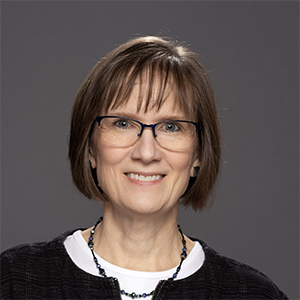
I study the early development of visual and manual skills in infants and children with and without developmental disabilities. In my home department at Vanderbilt University, I have held administrative positions including department Chair and head of the Developmental area. I have been a regular attendee of ICIS since 1990. My largest role to date has been planning the Program for the 2022 meeting in Ottawa (along with President Catherine Tamis-Lemonda, Jessica Sommerville, and Melissa Libertus). One lesson I learned is that to make our society as inclusive as possible (e.g., for those who don’t travel for physical, financial, or other reasons), we should embrace more remote options for reaching ICIS members, including making at least some of each meeting available online and/or in a hybrid format. As president-elect, my priorities would be to continue our commitment to transparency and inclusion for all of our members.
ICIS Partnership Chair Member at Large
This role will serve as a member-at-large of the board and will facilitate relationships with foundations and organizations, with the dual goals of representing the society in the international community of organizations focused on developmental science (e.g. the International Consortium of Developmental Science Societies) and procuring financial support for the congress activities

Lana Karasik
College of Staten Island, USA
My research examines how cultural variation in early caregiving shapes infant motor, cognitive, and social development, with ongoing fieldwork in Tajikistan and a commitment to situating Western developmental norms within their cultural context rather than treating them as universal benchmarks. This cross-cultural orientation aligns directly with ICIS’s core values of international representation and methodological diversity.
As a Professor at the Graduate Center and College of Staten Island, CUNY, I have extensive experience mentoring early-career researchers, serving on editorial boards, and building collaborative partnerships across institutional and national lines. I serve as an action editor for Infant and Child Development and Developmental Psychology, and my NSF-funded work reflects a sustained commitment to rigorous, ecologically valid science.
If elected, I would prioritize expanding ICIS’s international reach, strengthening support for graduate students and early-career scholars, and fostering partnerships that broaden the populations and perspectives represented in our field.
(RUB, Kramer)
Sabine Seehagen
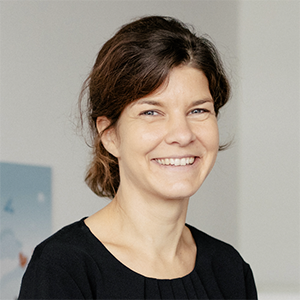
I am a developmental scientist at Ruhr University Bochum, Germany, where I study factors that shape early learning and development, with a particular interest in sleep and positive emotions. Having trained and worked in England and New Zealand before settling in Germany, I bring an international perspective to ICIS — one I was glad to contribute to as a member of the programme committee for ICIS 2024 in Glasgow.
Research conducted by ICIS members offers insights with direct relevance for policy and practice worldwide. If elected, my priorities for the partnership committee would be to strengthen existing partnerships that benefit our members — such as supporting student conference travel — and to pursue emerging strategic opportunities to extend ICIS’s reach, including through umbrella organisations such as the Federation of Associations in Behavioral and Brain Sciences. I would bring both enthusiasm and a practical, collaborative approach to the role.
ICIS Communication Chair Member at Large
This role will serve as a member-at-large of the board and will coordinate the Society’s communications activities. Members will cast one vote for the Communication Chair position.

John Franchak
University of California, Riverside, USA
Effective communication is crucial for maximizing the societal impact of infancy research. As researchers in this field, we must engage a diverse array of audiences: fellow scientists, funding bodies and government organizations, psychology students, and parents worldwide. If elected as Communications Chair, I plan to expand upon successful existing initiatives, such as The Baby Blog and Connecting With People interviews, to boost their international reach and engagement. While research dissemination is a primary focus, I also believe the ICIS Communications Committee should actively seek new avenues to bring in community and stakeholder perspectives to share with researchers. Furthermore, public access to reliable information on infancy and parenting is currently vulnerable to threats ranging from inaccurate AI-generated search summaries to politicization. The Communications Committee must strive to counter misinformation and strengthen public trust in developmental science.

Vincent Reid
If you are reading this, it is more than likely that you think that infancy research is vital for our understanding of development and for improving the health and wellbeing of humanity. Your view is probably not shared by most people. As the Communications Chair, I would be seeking to provide a platform to highlight the new methods and research findings emerging from our field so we all know about key advances. I will also seek to illustrate the relevance of the work that we do to the general public. The work that we do is truly essential in so many ways. We need to tell that story to as many people as possible. As a non USA or European researcher, I am keen to highlight the work of the Society happening throughout the world. I’m also the sort of person who is keen on governance and on making things truly work. The ICIS Strategic Plan may not have been updated since 2000, but it is still tightly aligned with my own core values and aspirations for the field. To that end I would be proactive and highly engaged in the Society, seeking new pathways and opportunities to communicate what we do to an international audience. I hope that you support my nomination.
ICIS Secretary Nominees

Caitlin M. Fausey
University of Oregon, USA
I am an Associate Professor of Psychology at the University of Oregon. My research aims to quantify infants’ everyday experiences in order to advance our understanding of experience-dependent developmental process. I think that scholarly silos are a barrier to progress and would bring my experiences collaborating on topics of language, vision, music, and motor development to my role in ICIS leadership. I also live with multiple sclerosis and would encourage our society to grapple with professional practices that may impact folks’ opportunities to contribute to science. I often introduce myself as “Hi, I’m Caitlin. I’m not known for my poker face.” and commit to using my transparent communication in service of our society’s important mission to “advancing the understanding of infant learning and development across the globe”!
Ori Ossmy
Birkbeck, University of London, UK
I am Professor Ori Ossmy, a developmental cognitive neuroscientist at Birkbeck, University of London, where I study how infants and children learn through action, perception, and real-world physical experience es. My work integrates developmental psychology, neuroscience, movement science, and computational methods to understand early learning. Across research, teaching, and mentoring, I care deeply about building rigorous, collaborative, and inclusive developmental science.
If elected to the ICIS Board as Secretary, I would bring energy, organisation, and a strong commitment to community. My priorities would be to support transparent and responsive governance, strengthen international and interdisciplinary connections, and help ensure that ICIS continues to be a welcoming intellectual home for researchers across methods, career stages, and backgrounds. I would also champion opportunities for early-career scholars and for research that reflects the diversity of infants, families, and contexts that shape development worldwide, with clarity, care, and a collaborative spirit in every decision made.